The scent of stale cigar smoke and defeat clung to the air in Nell’s office.
Silas Croft, his usual crisp demeanor slightly wilted, sat opposite her desk, his hat resting in his lap like a surrendered shield.
The late afternoon sun cast long, bar-like shadows across the mahogany, trapping them both in a cage of their own making.
“Beaten,” Nell repeated, the word a flat, dead thing on her tongue. “You said he was willing to talk.”
“He was,” Silas confirmed, his voice a low gravelly murmur. “Met him yesterday for a preliminary chat. A former dockworker for Vanderbilt, fired for speaking out of turn. He had grievances, a memory for faces, and a thirst for payback. I arranged to take his official statement this evening.”
Nell leaned forward, her hands clasped so tightly the knuckles shone white. “And now?”
“And now his wife says he took a fall down a flight of stairs. A very convenient fall. Broke his jaw, shattered his kneecap,” he explained.
He added, “He won’t be speaking to anyone for months. And when he can, I imagine his memory will have become… unreliable.”
Silas met her gaze, his own reflecting a grim professional frustration. “Whoever we’re up against, Mrs. Davies, they aren’t just trying to scare you. They’re methodical. They’re cutting off every path before we can even set foot on it.”
A cold dread, familiar and unwelcome, seeped into Nell’s bones. This was more than a business rivalry.
It was a war, and she was losing.
Every move she made was anticipated, every strategy countered. Vanderbilt wasn’t just trying to win the naval contract; he was trying to dismantle her, piece by piece, until nothing was left but wreckage.
She rose and walked to the window, her back to Silas, gazing down at the bustling shipyard that felt more like a battlefield every day.
The rhythmic clang of hammers on steel sounded less like progress and more like a ticking clock, counting down to her ruin.
She had rebuilt her walls, brick by painful brick, after Ronan Kent’s betrayal. She had sworn no one would get close enough to hurt her again.
But this new, invisible enemy didn’t need to get close; they were simply burning the world down around her.
“Thank you, Silas,” she said, her voice strained. “Keep looking. Check the hospitals for any other ‘accidents’ involving Vanderbilt’s former employees.”
“Of course, ma’am.” He paused at the door. “Be careful. They’re aware we’re looking now. The next warning may be more personal.”
The door clicked shut, leaving Nell in a silence that roared with failure. She was alone, cornered, and running out of time.
Ronan Kent hated the sour smell of spilled beer and desperation that permeated The Rusty Anchor.
The tavern, nestled in the grimiest corner of the Five Points, was a place where secrets were currency and a man’s life could be bought for the price of a bottle of cheap whiskey.
It was a necessary evil. The men his editor wanted him to expose frequented glittering ballrooms and mahogany-paneled clubs.
The men who did their dirty work gathered in places like this.
He sat in a dark booth, a half-empty glass of ale in front of him, the lurid headlines of his own articles mocking him from a discarded newspaper on the table.
Robber Baroness Rules with Iron Fist. It felt like a lifetime ago. The words were his, but the sentiment felt alien, a relic from a man who saw the world in stark black and white.
Now, all he saw were shades of gray, and at the center of them was a woman with eyes the color of a stormy sea and a spine made of forged steel.
The memory of her face in the warehouse—the genuine terror followed by unflinching command—was seared into his mind.
He had set out to write a story about a monster and had, instead, become one himself.
Guilt was a corrosive acid in his gut. It wasn’t just about journalistic integrity anymore; it was about the woman he had so publicly and callously wronged.
He had helped create the narrative that was strangling her, and he’d be damned if he didn’t do something to help her fight back.
A hulking shape slid into the booth opposite him. Mickey “The Fixer” O’Malley was a man whose face looked like a poorly drawn map of the city’s back alleys.
His nose had been broken more times than most men had been in love.
“Kent,” Mickey grunted, his eyes scanning the room. “You’re a long way from Park Avenue.”
“I’m looking for information,” Ronan said, sliding a small, heavy pouch across the table.
Mickey’s thick fingers closed around it, weighing it expertly. He grunted again, a sound of grudging approval. “Information’s my trade. What’s the trouble?”
“There have been… accidents. At the Davies shipyard.” Ronan kept his voice low. “A fire, a snapped crane cable. Professionally done. I need to know who has the skill and the lack of conscience to take that kind of work.”
Mickey leaned back, a flicker of something—interest, perhaps, or just greed—in his eyes. “That’s high-end trouble. Not your usual union-busting stuff. You’re talking about someone who knows how to make a thing look like an accident when it ain’t. Costs a pretty penny.”
“I’m not interested in the price. I need a name.”
Mickey was silent for a long moment, his gaze fixed on the grimy table as if divining an answer from the water rings. “There’s a crew,” he said finally.
“Quiet. Effective. They don’t work for just anyone. Their leader… a nasty piece of work named Silas Finn. Used to run security on Vanderbilt’s ships. Got drummed out for being too fond of his fists, but word is, he still does odd jobs for the old man when Vanderbilt needs hands that don’t mind getting dirty.”
Vanderbilt.
The name landed like a punch. It was the confirmation he needed, the missing link.
“Finn,” Ronan repeated, committing the name to memory. “Where can he be found?”
Mickey shook his head. “You don’t find Finn. He finds you, if he’s paid to. My advice? Forget you ever heard the name.” He pocketed the pouch and stood, melting back into the tavern’s smoky gloom.
Ronan sat for a long time, the name echoing in his head. Silas Finn.
He had it.
He had the weapon Nell needed. But handing it to her would mean crossing a line from which there was no return.
He would be betraying his editor, his profession, and every rule he had ever followed. He would be choosing a side.
He already had.
The note arrived by a street urchin, a grubby-faced boy who pressed the folded paper into Nell’s hand as she was leaving the shipyard for the day and vanished before she could ask a single question.
It was written on a scrap of cheap newsprint, the handwriting sharp and urgent.
I have a name. He works for Vanderbilt. Trust me. One time. The old stone bridge, Chelsea Pier. Midnight.
There was no signature. There didn’t need to be.
Nell’s first instinct was to burn it. It was a trap. Kent was playing some new, crueler game, luring her into a public spectacle to finish the job he started.
Her walls, so recently rebuilt, screamed at her to retreat, to barricade herself in her office and ignore the summons.
But the words echoed in her mind. A name. He works for Vanderbilt. Silas had just told her they had hit a dead end.
The saboteur was a ghost, and Vanderbilt was untouchable. What if this wasn’t a trap? What if it was a lifeline? The journalist in Kent was relentless; if he had uncovered a lead, it was likely a real one.
Desperation was a more powerful motivator than pride.
The thought of losing everything she had fought for, of letting Vanderbilt win, was more terrifying than any trap Ronan Kent could set.
She would go. But she would go prepared.
Tucked into the pocket of her coat, the cool, metallic weight of her late husband’s small derringer was a cold comfort.
Midnight found the Chelsea Pier shrouded in a thick, rolling fog that swallowed the gaslights and muffled the sound of the river lapping against the pilings.
It was a ghost’s world, a fitting stage for a meeting between adversaries.
Nell stood in the shadow of the old stone bridge, the damp air chilling her to the bone. Every creak of wood, every distant cry of a gull, sent a fresh jolt of adrenaline through her.
He emerged from the mist so silently she almost didn’t see him until he was a few feet away.
Ronan looked different here, away from the ink and bluster of his newspaper. He wore a simple dark coat, his collar turned up against the cold, and the usual cocksure glint in his eye was replaced by a haunted, weary intensity.
“You came,” he said, his voice low and rough.
“I’m not a fool,” she clipped back, her hand tightening on the pistol in her pocket. “If this is some ploy to humiliate me further—”
“It’s not,” he interrupted, his earnestness cutting through her anger. “I know you have no reason to believe me, Nell. I wouldn’t, in your position. But I was wrong. About you, about all of this.”
He took a half-step closer, and she stood her ground. “Why should I care what you think?”
“Because I can help you,” he said, his gaze unwavering. “The man coordinating the sabotage is named Silas Finn. He’s a former head of security for Vanderbilt’s shipping line. A hired thug. Your Pinkerton can look into him, but he’ll find the connection is there. This is the proof you need.”
The name landed with the force of a physical blow.
It was specific. It was verifiable.
It was everything she and Silas had been searching for. The knowledge was a key, and he was simply… giving it to her.
Her defenses began to crumble, worn down by weeks of fear and isolation.
She looked at him, truly looked at him, and saw not the arrogant journalist, but a man plagued by his own conscience. A man who was risking everything—his career, his reputation—to hand her a weapon.
“Why?” she whispered, the question raw with a week’s worth of fury and a flicker of nascent hope. “Why would you do this?”
“Because I saw you,” he said, his voice barely audible over the river’s murmur. “In that warehouse, when the crane fell. I saw who you really are. I’ve spent my career writing stories, but I almost let myself become the villain in yours. I can’t let that happen. I can’t let him destroy you.”
The confession hung in the air between them, intimate and shocking.
The immense pressure of the past weeks, the constant fear, the crushing loneliness—it all converged in that single moment.
He wasn’t her enemy anymore. In this fog-drenched, dangerous world, he was the only person who seemed to understand the truth.
A profound, aching gratitude washed over her, so potent it left her breathless. Without thinking, without planning, she closed the distance between them.
Her hands came up to frame his face, her fingers cold against his skin. His eyes widened in surprise, but he didn’t pull away.
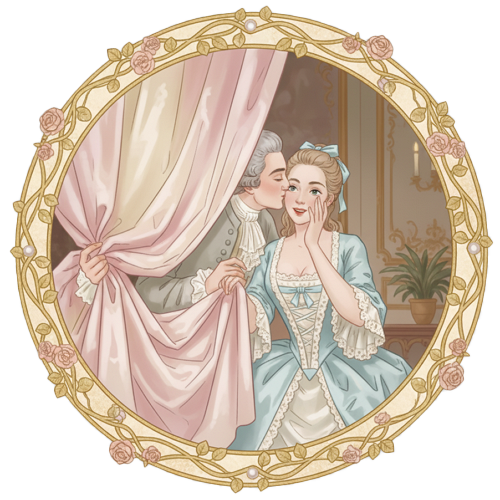
Then, in a rush of shared desperation and startling tenderness, she kissed him.
It was not a gentle kiss. It was fierce, hungry, and freighted with all the unspoken tension that had crackled between them since their first meeting.
It was the heat of the fire in the warehouse, the shock of the falling crane, and the icy dread of their fight.
His arms wrapped around her waist, pulling her flush against him, and he responded with an equal, desperate force.
It was a kiss of surrender and defiance, an admission of a truth they had both been fighting.
When they finally broke apart, gasping for air in the cold night, the world had shifted on its axis.
The line between enemy and ally had been erased.
They were two people clinging to each other in a storm, and a dangerous, fragile, and utterly undeniable alliance had just been sealed.