The morning air, usually a welcome balm of damp earth and blooming jasmine, felt heavy and charged.
Rowan stood by the raised beds of heirloom tomatoes, the familiar green of their leaves doing little to soothe the frantic hum beneath her skin.
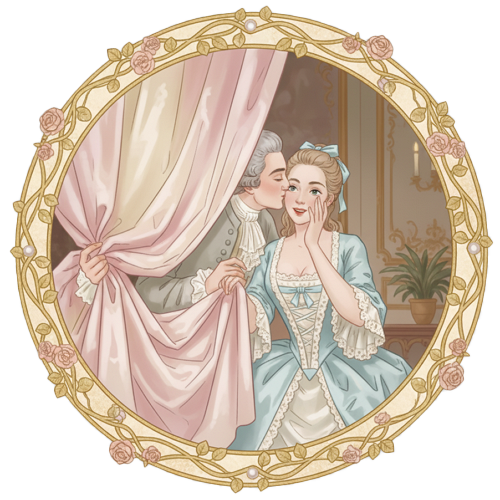
Every time she closed her eyes, she felt the ghost of Kael’s lips on hers, the desperate, unyielding pressure that had stolen the air from her lungs and replaced it with a fire she’d never known.
It was a kiss that hadn’t felt like a beginning, but like a confession. Of what, she had no idea.
He was already there, of course, moving with his usual silent grace near the old brick wall where the climbing hydrangeas grew.
But the grace was strained today.
There was a rigidity in his shoulders, a deliberate focus on his task that was too intense for simple weeding. He hadn’t looked at her yet.
She hadn’t looked at him.
They were two magnets turned to their opposing poles, acutely aware of each other’s presence in the field of the garden, yet unable to connect.
The silence stretched, thin and fragile. Last night, it had been filled with shared wine and vulnerable truths—or his version of them.
Today, it was a chasm.
“The soil seems… dry this morning,” she said, her voice sounding unnaturally loud.
Kael’s hands stilled.
He finally turned, and the sunlight caught the exhaustion etched on his face.
There were faint, bruised-looking shadows under his eyes. “It does,” he agreed, his voice a low rumble. He looked at the soil, at the leaves, at the sky—anywhere but at her. “Unseasonably so.”
The awkwardness was a physical thing, a third presence between them.
It tangled in the morning glory vines and settled like a blight on the mint. She remembered the startling intensity in his eyes, the raw need that had mirrored her own.
How could they go from that to this stilted conversation about dirt?
“About last night…” she started, forcing the words out.
He flinched, a barely perceptible tightening of his jaw. “Rowan.”
He finally met her gaze, and the troubled depths of his grey eyes made her breath catch. “It was… unexpected.”
“Understatement of the year,” she muttered, pulling a weed with more force than necessary. The roots snapped. “Look, I don’t know what that was, or what you’re thinking, but—”
“I think,” he interrupted, his voice soft but firm, “that we have a lot of work to do today. And that we should focus on that.”
It was a dismissal.
A clean, sharp severing of the thread that had connected them under the moonlight. It stung more than she wanted to admit.
She felt a flush of anger, of embarrassment. Was he regretting it? Was she just another distraction he’d indulged in a moment of weakness?
The thought soured the morning completely.
“Fine,” she clipped out, turning her back to him. “The roses need deadheading. I’ll start there.”
She walked away, feeling his gaze on her back. The space between them now felt safer, but infinitely colder.
The unspoken secret of their kiss wasn’t a warm ember; it was a shard of ice, wedged deep in her chest.
An hour later, the chill became literal.
Rowan was working her way through a sprawling patch of spearmint near the back fence when she saw it.
The leaves on one side of the patch, the side cloaked in the deep shade of the neighboring building, were rimmed with frost.
Not the gentle, crystalline frost of a cool autumn morning, but a greasy, black-edged rime that seemed to suck the very color from the plants. It was nearly seventy degrees.
“What the hell?” she breathed, kneeling down.
She touched a leaf. It was brittle and cold as death, crumbling into a dark, greasy powder between her fingers. An unnatural cold radiated from the soil itself, seeping through the knees of her jeans. This wasn’t a disease. It wasn’t a pest. It was… wrong.
A flicker of movement at the edge of her vision made her look up.
A shadow detached itself from the deeper gloom under the fire escape and skittered along the base of the brick wall.
It was too fast, too low to the ground to be a cat or a rat. It was a slip of absolute blackness, a piece of night that had forgotten to leave when the sun rose.
It vanished behind a compost bin before her brain could fully process it.
Her heart hammered against her ribs. “Kael?” she called out, her voice trembling slightly.
He was by her side in an instant, his earlier distance forgotten.
He knelt, his eyes fixed on the blighted mint. The casual observer would see concern. Rowan, who had spent hours watching him, saw a flash of something else: grim, furious recognition.
“What is that?” she asked. “Is it some kind of fungus? A chemical burn?”
He didn’t answer immediately.
He reached out a hand, hesitating just above the frozen leaves. The air around his fingers seemed to shimmer for a barest second. “It’s a blight,” he said finally, his voice carefully controlled. “We should dig up this entire patch. Burn it.”
“Burn it? Kael, that’s extreme. I should take a sample, see if I can identify—”
“No.” The word was hard, absolute. He looked up at her, his expression fierce. “No samples. Don’t touch it again with your bare hands. This kind of corruption can spread. We need to cut it out completely.”
His certainty was unsettling.
He wasn’t speaking like a landscape consultant; he was speaking like a soldier identifying an enemy minefield.
Before she could argue, he was gone, returning moments later with a spade and a heavy-duty contractor bag.
He worked with a cold, ruthless efficiency, carving out the entire section of blighted earth, his movements precise and angry.
He never once let his skin touch the affected plants.
As he worked, Rowan scanned the edges of the garden, her senses on high alert.
The world seemed different now, the shadows deeper, the quiet corners more menacing. The city’s hum was a low growl.
Was she imagining it, or did the air itself feel thinner, colder?
She felt watched, a primal prickling on the back of her neck that had nothing to do with Kael’s brooding presence and everything to do with that skittering patch of darkness.
That night, Kael waited until the last of the city lights had softened to a dull amber glow and the garden was truly alone.
He moved through the familiar paths, but his steps were not those of a gardener. He was a sentinel pacing the walls of a fortress under siege.
The Unseelie were testing the perimeter.
The frost-blight on the mint was a simple probe, a crude but effective tool to gauge the garden’s defenses. The shadow-skulkers were scouts.
They were growing bolder. Morwen was impatient.
He stopped at the northernmost fence post, the one closest to the alley where he had first arrived.
Reaching into his pocket, he pulled out a small, wickedly sharp silver knife.
The metal was cool against his skin, a piece of his own world in this cacophony of iron and gasoline.
He pressed the tip of his thumb against the blade, drawing a single, shimmering drop of blood.
With his bloodied thumb, he began to trace a symbol onto the weathered wood of the post.
It was a glyph of binding and protection, an intricate knot of lines and curves that seemed to shimmer with a faint, silvery light as he drew it.
The magic flowed from him, a current of pure life force, weaving itself into the wood. He felt the familiar drain, a hollowing in his core as his own energy was poured into the ward.
The Silverwood Court was fading, and so was his strength. Every ward he placed was a piece of his own life, given away.
He pushed the thought aside. He had to. He moved to the next post, and the next, a silent phantom repeating the ritual.
A bead of sweat traced a path down his temple, cold in the night air. With each ward, the exhaustion deepened, settling into his bones like a creeping frost.
He could feel the Unseelie presence pressing at the edges, a malevolent curiosity that recoiled from the nascent line of his wards.
They would not be deterred for long. This was a stopgap, a temporary dam against a rising tide.
When he finished the final symbol on the gatepost, he sagged against it, his breath coming in ragged gasps.
The garden around him felt subtly different—safer, perhaps, but the air also felt tighter, humming with a power that did not belong here.
He had wrapped this vibrant, chaotic, human place in the ancient magic of his dying world.
The irony was a bitter pill. He was protecting the thing he had come to steal, draining himself to defend the woman he was meant to betray.
And all he could think about was the look on her face when he had told her to burn the mint—the flicker of fear, yes, but also of confusion and a dawning suspicion.
How long could he keep this up before she saw the truth?
Before she saw the monster hiding behind the gardener’s hands?
The next day, Kael looked like hell.
The shadows under his eyes were no longer faint smudges; they were deep, bruised hollows.
His skin had a pale, almost translucent quality, and when he lifted a bag of mulch, his movements were slow, his muscles tight with effort.
Rowan watched him from across the garden, a knot of worry tightening in her stomach.
He was pushing himself too hard, working from sunup to sundown, and from the looks of it, not sleeping at all. Her anger from the morning before had evaporated, replaced by a gnawing concern.
“You need to take a break,” she said, walking over to him. She held out a bottle of water. “Seriously, Kael. You look like you’re about to collapse.”
He took the bottle, his fingers brushing hers. The jolt was still there, a flicker of heat that seemed to mock the exhaustion on his face. “I’m fine,” he said, his voice rough. He didn’t meet her eyes.
“No, you’re not,” she insisted. “You’ve barely said ten words all day. And you’re as pale as a ghost.”
A flicker of something—wry humor? pain?—crossed his face. “Just tired.”
It wasn’t just tiredness.
It was a bone-deep weariness she’d only ever seen in people suffering from a long illness. Her gaze fell to the fence line he’d been reinforcing.
He’d been meticulous, checking every board, tightening every wire. It was there, on the thick oak post of the main gate, that she saw it.
Carved into the wood, almost invisible unless you were looking for it, was a symbol.
It was a complex, elegant knot of swirling lines, unlike any woodworking flourish or graffiti tag she had ever seen. It looked ancient, organic, like a stylized seed pod or a Celtic knot drawn by someone with a deep understanding of sacred geometry.
She reached out and traced the lines with her finger.
A faint, almost imperceptible vibration hummed against her skin, a low thrum of energy that made the hairs on her arm stand up.
It felt… alive.
Her head snapped up, and her eyes met Kael’s.
He had gone utterly still, his face a mask of stone. But she saw the flicker of panic in his eyes before he could hide it.
Suddenly, everything clicked into place with a sickening lurch.
Liam’s warnings about Kael being a ghost. The unnatural blight on the mint. The shadow she’d seen. Kael’s exhaustion. And now this.
This strange, humming symbol carved into her fence.
Her worry and her attraction were still there, a confusing, insistent hum in the back of her mind. But they were now drowned out by a louder, colder feeling: suspicion.
A deep, instinctual certainty that the man standing before her was hiding something far more profound than a simple kiss.
“What is this, Kael?” she asked, her voice barely a whisper, her finger still resting on the impossible symbol. “What are you doing to my garden?”