The air in Alistair’s study, usually a comforting cocoon of old leather and drying ink, was charged with the brittle energy of a coming storm.
The news had arrived less than an hour ago, a formally worded letter delivered by a grim-faced courier.
It was an official inquiry from the Crown, prompted by an “anonymous but concerned party,” into the shipping manifests of the Blackwood estate.
The letter was polite, couched in the language of bureaucratic procedure, but its intent was as sharp and deadly as a shard of glass.
Alistair stood before the cold hearth, the letter crushed in his fist. He had read it three times, each reading sending a fresh wave of ice through his veins.
Lord Davies. It had to be.
The man’s oily insinuations at the ball had not been mere society gossip; they had been the opening shots of a calculated war.
Davies was not content to chip away at Alistair’s political influence; he meant to shatter his reputation, to dismantle the Beaumont name stone by stone.
A familiar, suffocating paranoia began to close in. He had felt this before—the sickening lurch of betrayal, the feeling of the walls pressing inward.
Years ago, it had been his research, his life’s work, stolen by a man he’d called a friend.
Now, it was his legacy, his very honor, under attack.
He had learned his lesson then: trust was a currency for fools, and proximity to scandal was a contagion. Anyone standing too close when the axe fell would be cut down as well.
The thought of Beatrice struck him with the force of a physical blow.
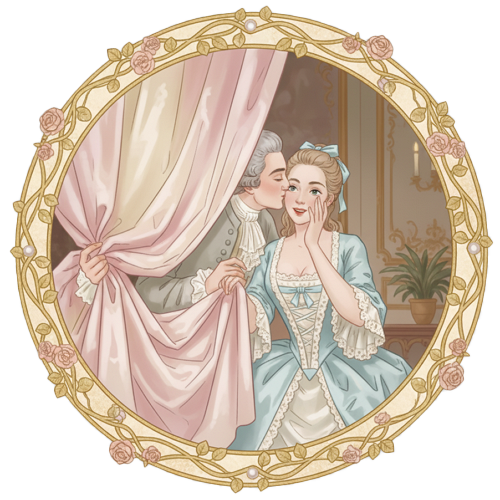
Her face, illuminated by lamplight in the greenhouse, her eyes bright with their shared discovery. Her lips, soft and tentative against his, a moment of impossible, breathtaking clarity.
That kiss had been a revelation, a dismantling of every wall he had so carefully constructed.
And their agreement that morning—a true, formal partnership—had felt like the beginning of something solid, something real.
Now, it was a liability. A danger.
His association with her, once a source of unexpected joy, was now a threat to her own burgeoning career.
Davies would not hesitate to drag her name through the mud alongside his own, to paint her as a co-conspirator or, worse, a naive woman duped by a criminal Earl.
He would not allow it. He had to protect her.
And the only way to protect her was to cut her out, completely and ruthlessly.
The decision settled in his chest like a block of ice. It was a necessary cruelty.
A light knock echoed at the study door. “My lord?”
It was her voice, hesitant but clear.
Alistair straightened, schooling his features into a mask of impenetrable coldness. He smoothed the crumpled letter on his desk. “Enter.”
Beatrice stepped inside, a folder of her latest illustrations held against her chest like a shield.
Her expression was one of tentative optimism, the glow from their recent breakthrough still warming her eyes. That look, so full of nascent trust and shared excitement, was a dagger to his conscience.
“I heard a courier arrived from London,” she began, her gaze searching his. “Is everything alright? I thought perhaps it was news from the Royal Society.”
“It was not,” Alistair said, his voice flat and devoid of the warmth she had grown accustomed to. He did not invite her to sit, leaving her standing in the vast space between the door and his desk.
The subtle shift in his demeanor was instantaneous and jarring. The easy camaraderie of the morning, the unspoken tension that had simmered so deliciously between them since the kiss, had vanished.
In its place was the Earl of Blackwood, a man she had nearly forgotten—imperious, distant, and unreadable.
“Oh,” she said, her smile faltering. She took a step closer, her brow furrowed with concern. “Alistair, what is it? You look as if you’ve seen a ghost.”
The use of his given name, a liberty he had silently granted, now felt like a brand on his skin. He had to extinguish that familiarity.
“There has been a development, Miss Holloway,” he stated, his tone formal.
“A serious one. Lord Davies has seen fit to lodge a formal complaint regarding my estate’s shipping practices. There is to be an official inquiry.”
Beatrice’s eyes widened. “An inquiry? On what grounds?”
“Smuggling,” he said, the word tasting like ash in his mouth. “He has anonymously accused me of using my botanical imports as a cover for illicit trade.”
A gasp escaped her lips. “But that’s absurd! It’s a complete fabrication. We can prove it. Our records, the ledgers—”
“It is not your concern.”
The words, clipped and cold, stopped her short. She stared at him, bewildered.
“Not my concern? Alistair, my name will be on the paper alongside yours. Our discovery is tied to the very shipments he is questioning. Of course, it is my concern.”
He turned to face her fully, his expression a carefully constructed wall of indifference.
This was the most difficult part. He had to make her believe he wanted her gone.
“The terms of our partnership were predicated on a joint scientific endeavor. They did not include entanglement in a political scandal. The situation has changed.”
Her folder of sketches lowered slightly. A flicker of hurt, sharp and deep, crossed her features before being quickly masked by confusion.
“Changed how? We should be working together to fight this. I can help. My father, for all his faults, knew a great deal about shipping law. I can review the manifests—”
“That will not be necessary,” he interrupted. “I will handle this myself. It is a Beaumont family matter.”
A painful silence stretched between them, thick with misunderstanding. To Beatrice, his words were not protective; they were dismissive.
A Beaumont family matter.
He was drawing a line in the sand, placing her firmly on the other side.
After everything—the late nights, the shared laughter, the breathtaking discovery, the kiss that had promised a new world—he was reducing her to a mere business associate, one to be discarded at the first sign of trouble.
Her insecurity, an ever-present shadow in her life as a female scientist, rushed to the forefront.
He had never truly seen her as an equal. The partnership, the kiss—it had all been a flight of fancy. He was an Earl, and she was a liability.
“I see,” she said, her voice acquiring a cool, brittle edge. “So, our partnership is dissolved?”
He seized on the word, though it felt like swallowing glass. “For the present, it is the only prudent course of action. Your association with this estate, with me, is… inadvisable until this matter is resolved.”
Her chin lifted, a familiar spark of defiance kindling in her eyes, though this time it was edged with pain.
“How very convenient for you, my lord. An accusation of smuggling provides the perfect excuse.”
Alistair’s jaw tightened. “Excuse for what, Miss Holloway?”
“To retreat,” she shot back, her voice trembling with barely suppressed emotion.
“To regret. I should have known. A moment of… unprofessional enthusiasm in the greenhouse, and you have been looking for a way to extricate yourself ever since. You needn’t have waited for Lord Davies to provide a pretext. A simple, honest rejection would have sufficed.”
He stared at her, stunned into silence.
She thought this was about the kiss? That he regretted it?
The irony was so bitter it almost made him laugh. He wanted nothing more than to cross the room, take her in his arms, and tell her that the kiss was the only thing that had made sense to him in years.
But to do so would be to pull her deeper into the mire. It would confirm her connection to him in the eyes of the world, making her a target.
His silence, he believed, was her shield.
To Beatrice, his silence was a confession. It confirmed her deepest fears.
He was ashamed of what had happened between them, and he was using this scandal as a gentlemanly—or rather, a cowardly—way out.
The professional respect he had shown her was a sham, and the personal connection she had dared to hope for was an illusion.
“My apologies for the misunderstanding, Lord Blackwood,” she said, the formal address a deliberate strike. She placed her folder of illustrations on the edge of his desk with a quiet thud.
“These are my latest drawings of the Cymbidium. I trust you will find them adequate. I will, of course, suspend my research on your land until you have… handled your family matter.”
She turned, her back ramrod straight, and walked toward the door.
Every instinct screamed at Alistair to call her back, to explain, to bridge the painful chasm that had just opened between them. But the ghost of his past betrayal, the looming shadow of Davies, held him paralyzed.
This is for her own good, he told himself, the mantra a cold comfort. She will be safe, far from this ugliness.
At the door, Beatrice paused, her hand on the brass knob, but she did not turn around.
“For what it’s worth,” she said, her voice low and steady, “I never for a moment believed the accusation. I believe in your integrity. It’s a pity you did not believe in my strength.”
Then she was gone, leaving behind only the scent of rain-damp wool and crushed pride. The heavy oak door clicked shut, the sound echoing the final, decisive closing of a door in his own heart.
Alistair sank into his chair, the crushing weight of his self-imposed isolation descending upon him.
He had succeeded. He had pushed her away, presumably to safety.
But as he stared at the folder of her exquisite, precise drawings, he felt no sense of victory, only the profound and agonizing ache of a man who had just severed his own lifeline.