Anya woke to the low, rhythmic hum of the fortress’s life support, a sound that had become as natural as her own breathing. For a moment, suspended in the soft gray light filtering through the polarized window, she felt a profound sense of peace.
The terror of the chase, the crushing weight of the Aegis vulnerability—it all seemed distant, muted by the memory of the night before.
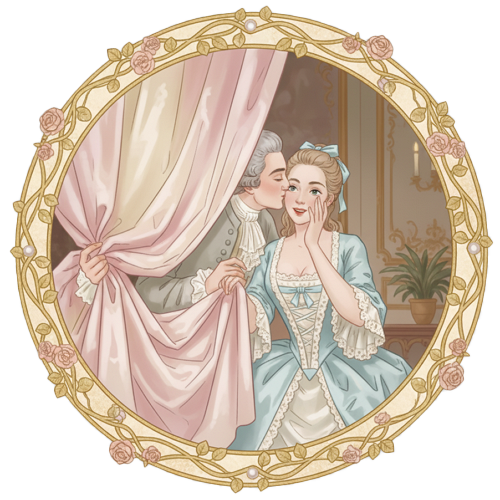
The kiss.
It hadn’t been a Hollywood moment of soaring passion. It had been something quieter, more fragile, and infinitely more real.
It was the closing of a circuit. In the silent language of code, they had found a common ground, but in that moment, in the dim glow of the server racks, he had shared a different kind of source code—his own.
She could still feel the hesitant pressure of his lips, the surprising warmth of his hand on her arm, the unguarded look in his eyes that said more than a thousand lines of text. He had seen her, and he had let her see him.
A hopeful energy buzzed beneath her skin as she swung her legs out of bed. She dressed quickly, pulling on a soft sweater against the perpetual chill of the compound, her mind already jumping ahead.
Maybe this was the turning point. Maybe the trust they’d built over lines of code had finally migrated from the virtual to the physical.
Maybe today, the silence between them would be a comfortable one, filled with shared understanding instead of anxious voids.
She walked into the central hub, the vast, open-plan space that served as their lab, kitchen, and living room.
A fresh pot of coffee was already brewed, its rich aroma cutting through the sterile air. Elias was there, just as she’d expected.
He was exactly where she’d left him, seated before the curved wall of monitors, but the man from last night was gone. In his place was the architect in his fortress, the ghost in his own machine.
His shoulders were hunched, his posture a defensive crouch over the keyboard.
A cascade of green and white text scrolled down one of the screens, a diagnostic he was running, but his focus was absolute, a shield erected against the outside world. Against her.
“Morning,” she said, keeping her voice soft as she poured herself a mug of coffee.
He didn’t turn. His fingers never stopped moving across the keyboard.
“Morning,” he clipped out, the word devoid of any inflection.
The hopeful buzz in her chest fizzled into a dull pang of uncertainty. She moved to the workstation adjacent to his, the space that had become hers, and set her mug down.
The warmth seeped into her hands. “Did you sleep at all?”
“Worked,” he said. The word was a slammed door.
An awkward, heavy silence descended, broken only by the click-clack of his typing and the whisper of the ventilation system. Last night, the silence had been intimate.
This morning, it was a chasm. Anya stared at her own dark screen, seeing her confused reflection in the glass.
She tried to debug the situation, to analyze the input and predict the output. The input was the kiss, a moment of profound vulnerability.
The output… was this. A total system restore to his default settings: distant, unreadable, unreachable.
“Find anything new?” she tried again, gesturing vaguely at the waterfall of data on his monitor.
“Anomalies in the memory allocation protocol. Could be a secondary access vector. I’m isolating it.”
His explanation was purely technical, a report delivered to a colleague, not a word shared with the woman he had kissed hours earlier. The whiplash was staggering.
It hurt more than she wanted to admit. She felt a flush of embarrassment, of foolishness.
Had she misread everything? Was the kiss just a momentary glitch in his programming, a stress-induced error he was now trying to patch?
The day bled away in that suffocating silence. It was worse than any argument.
An argument was a connection, a fiery, dysfunctional one, but a connection nonetheless. This was a void.
Every sound was amplified—the scrape of a chair, the soft thud of a book set on a table, the hiss of the espresso machine. Each one was a stark reminder of the human sounds that were absent: conversation, laughter, a simple sigh of shared frustration.
Elias worked with a frantic, desperate energy, his entire being poured into the machine in front of him. He was building a wall of code between them, one line at a time.
Anya watched him from the corner of her eye, noting the tense set of his jaw, the way he’d periodically rub his temples as if staving off a migraine. This wasn’t anger.
It was fear. His anxiety was flaring, she realized, a solar flare of raw panic that was incinerating everything in its path.
The breach last night hadn’t been in the Aegis code; it had been in his own. And now, he was in full lockdown.
She tried to work, to focus on tracing the mercenaries’ digital signature, but her thoughts kept snagging on him. She felt a rising tide of frustration, not just at him, but at the unfairness of it.
She wanted to shake him, to shout into the void, Don’t do this. Don’t disappear on me. We were just getting somewhere.
But she knew it would be like shouting at a hurricane. The force was internal, beyond his control, and any attempt to fight it from the outside would only make it stronger.
By midday, the silence was a physical weight in the room. Anya stood up, needing to move, to do something other than sit and watch him evaporate.
“I’m going to run a deeper scan on the IP logs from the last attack,” she announced to the room at large. “See if I can find a geo-locator.”
Elias gave a short, sharp nod, his eyes never leaving the screen. That was it. An acknowledgment that she had spoken.
The dismissal stung, sharper this time. Hurt curdled into a quiet anger.
She retreated to her station, her own fingers flying across her keyboard now, her frustration channeled into the focused, clinical task of hunting their hunters. If he wouldn’t let her in, she would focus on the enemy that she could fight.
***
Miles away, in a sleek corner office overlooking the rain-slicked canyons of the financial district, Caleb Thorne held a phone to his ear, his voice a smooth, concerned balm. He swiveled in his leather chair, watching the city lights blur into impressionistic streaks.
“Marcus, I’m only talking to you because I trust your discretion,” he said, his tone pitched perfectly between urgency and reluctance.
“This is entirely off the record, of course. I’m just… worried. For my brother, and for the company.”
On the other end of the line, Marcus Thorne, a veteran financial journalist with a shark’s instinct for blood in the water, leaned forward at his desk.
“Worry is my business, Caleb. What’s going on?”
“It’s Elias,” Caleb sighed, a masterful performance of fraternal angst.
“He’s brilliant, you know that. A once-in-a-generation mind. But he’s… fragile. The pressure of this so-called ‘security incident’ is getting to him. He’s gone completely dark. Not taking calls from the board, not responding to anyone. He’s locked himself away.”
“So the rumors of a lockdown at his private compound are true?” Marcus asked, typing furiously.
“I can’t confirm specifics,” Caleb said, which was, in itself, a form of confirmation. “All I know is that leadership requires stability.
It requires communication. When the captain of the ship locks himself in his cabin during a storm, the crew gets nervous.
And frankly, so do the shareholders. I’m doing my best to steer us through this, but my hands are tied as long as he’s officially at the helm.”
He let the words hang in the air, a carefully crafted narrative of a troubled genius and a responsible brother forced to consider an impossible choice. He was painting a picture of leadership instability, a term that was poison to the stock market.
“This is big, Caleb,” Marcus said, his voice tight with excitement. “Are you saying you think he’s unfit to lead through this crisis?”
“I would never say that,” Caleb replied, his voice dripping with false sincerity.
“I’m just saying that the company needs a steady hand, now more than ever. Elias’s well-being is my top priority. But the well-being of Thorne Industries has to be a close second. Do with that what you will.”
He ended the call and placed the phone on his polished mahogany desk. A slow, satisfied smile spread across his face.
The bait was in the water. Now, he just had to wait for the feeding frenzy to begin.
***
Back in the fortress, the first alert chimed softly on a secondary monitor. A news notification.
Anya glanced at it, her eyes scanning the headline:
Thorne Industries Leadership in Question Amidst Unconfirmed Security Crisis. Sources Cite CEO Elias Thorne’s Increasing Isolation.
Beneath it, a live stock ticker glowed a venomous red. T.IND -8.4%.
Anya’s blood ran cold. She looked from the headline to the man sitting a few feet away, a man so deep in his own crisis that he was oblivious to the one now engulfing his company.
The silence in the room suddenly felt heavier, more dangerous. The world was closing in, the external threats mounting, and the one person she needed to fight alongside her was lost in a war inside his own head.
“Elias,” she said, her voice sharp, cutting through the quiet.
He flinched, as if her voice were a physical blow. Slowly, reluctantly, he turned his head.
His eyes, when they finally met hers, were haunted, exhausted, and filled with the same panicked distance she’d seen all day. He looked past her, at the screen, at the damning red letters spelling out his company’s hemorrhaging value.
He didn’t speak. He just stared, and Anya watched as another brick settled into the wall he was building between them.
The breach had happened last night, but the damage, she feared, was only just beginning.