The only sounds in the server-room-turned-command-center were the whisper-quiet hum of the cooling fans and the frantic, syncopated rhythm of two sets of fingers flying across keyboards. The air was cold and sterile, but their shared workspace was an island of chaos.
Empty coffee mugs and crumpled energy bar wrappers littered the console, monuments to the forty-eight hours they had spent locked in a digital war of attrition.
Anya’s eyes burned. Every line of code was starting to blur into a neon green waterfall against the dark screen, a hypnotic cascade of logic and potential failure. They were so close.
The vulnerability wasn’t a single flaw; it was a hairline fracture that spiderwebbed through the deepest, most foundational layers of Aegis. They had been chasing one of those fractures for the last twelve hours, a particularly insidious one that created a recursive ghost process, impossible to terminate without crashing the entire system.
“It’s a Hydra,” she murmured, her voice raspy with exhaustion. “We cut off one head, two more spawn in its place.”
Across the console, Elias didn’t look up. His focus was absolute, his posture a rigid line of concentration. For hours, the only communication between them had been this strange, shared language of code and clipped phrases.
It was more intimate than any conversation they’d had. She knew the cadence of his typing, the way he would pause for precisely 1.3 seconds before refactoring a complex function.
She could anticipate his digital movements as if they were her own.
`> We’re not trying to kill it,` a message appeared on her monitor from his terminal. `> We’re trying to tame it.`
Of course. She had been thinking like an exterminator; he was thinking like its creator.
He wasn’t trying to destroy a piece of his work, however flawed. He was trying to heal it.
Her fingers flew, scrolling back through thousands of lines.
“The entry point for the recursion is tied to the primary authentication kernel,” she said aloud, her brain catching up to her fingers.
“It’s using the system’s own security handshake to replicate itself. Line 1,482,991. The declaration is masked as a garbage collection protocol.”
His typing stopped. The sudden silence was deafening.
Anya held her breath, her heart hammering against her ribs. She watched his cursor blink, motionless, for a long moment.
Then, a blur of motion. He wasn’t just refactoring; he was weaving an entirely new logical thread, a golden strand of code that didn’t cut the knot but elegantly untied it.
It was breathtaking. He created a dummy authentication loop, a perfect mirror of the original, and set it on a parallel track. The ghost process, designed to chase its own tail, would latch onto the decoy, trapping itself in a harmless, isolated sandbox.
`> Run the simulation,` his message flashed.
Anya initiated the sequence. Her own code, the patch they had designed to seal the initial entry point, wrapped around his elegant trap.
The simulation began, a virtual world where their fix was pitted against the full force of the exploit. Green status indicators ticked by on the main screen.
System integrity: 99%. Core stability: 99%. For a full minute, the numbers held.
The progress bar crept across the screen with agonizing slowness. Anya found herself leaning forward, her body tense, every muscle coiled.
Then, a cascade of green.
`SYSTEM INTEGRITY: 100%`
`CORE STABILITY: 100%`
`VULNERABILITY PATCH: SUCCESSFUL`
`GHOST PROCESS: ISOLATED`
Anya sagged back in her chair, a laugh bubbling up from her chest—a sound of pure, unadulterated relief. “It worked,” she whispered, the words feeling foreign after so long.
“Holy hell, Elias. It actually worked.”
She turned to him, a wide, triumphant grin on her face, and for the first time in what felt like days, she saw him not as a series of text messages or a silhouette hunched over a keyboard, but as a man.
His shoulders were slumped with a fatigue that mirrored her own, but there was a light in his eyes she had never seen before—a soft, unguarded glow. And then he did something that made her heart skip a beat. He smiled.
Not the fleeting, barely-there twitch she’d seen once before, but a genuine, slow-blooming smile that transformed his entire face, erasing the anxious tension from around his eyes.
“We did it,” he said, his voice quiet but clear, stripped of its usual hesitant edge.
The adrenaline of the breakthrough began to recede, leaving behind a profound stillness. The hum of the servers seemed to fade into the background.
All Anya was aware of was the two of them, sitting inches apart in the cool, blue light of the monitors, sharing a silence that felt heavy with unspoken things. The professional barrier that had defined their interactions had been vaporized in the heat of their shared victory.
He turned his chair slightly to face her, his gaze dropping to the lines of code still displayed on the main screen.
“I wrote that section of the kernel when I was nineteen,” he said, his voice barely above a whisper.
“I was living on instant noodles and sleeping on the floor of my dorm room. I thought… I thought it was perfect.”
He wasn’t just talking about code. Anya knew it instinctively.
She stayed silent, giving him the space to say what he needed to say.
“Aegis…” he began, then hesitated, searching for the words.
“It’s not just an operating system. It’s… a map of my mind. Every line of code is a thought, a decision, a part of me. It’s how I make sense of the world. It’s how I talk to it, when I can’t…”
His hand gestured vaguely, encompassing the room, the fortress, the distance he put between himself and everyone else.
Anya’s chest ached with a sudden, overwhelming wave of empathy. He wasn’t a myth or a machine.
He was a man who had built a world for himself out of logic because the real one was too loud, too chaotic, too frightening.
“When you sent that first report,” he continued, his eyes still fixed on the screen, “and I saw the flaw… it felt like you had found this broken, ugly thing inside of me. A part of me that I didn’t even know was there. Something fundamentally wrong.”
He finally lifted his head and looked at her. His eyes, a startlingly clear gray, were wide and vulnerable.
The brilliant, untouchable genius was gone. In his place was just Elias.
“Everyone else only ever saw the surface. The perfection. The impenetrable fortress. But you… you were the first person to see the crack in the foundation. You went right to the deepest, most broken part of it.”
He took a shaky breath.
“And you didn’t judge it. You didn’t run from it. You just… understood it. And you helped me fix it.”
The space between them crackled with an energy that had nothing to do with servers and electricity. It was raw and intensely human.
Anya felt as if she were seeing him—the real him—for the very first time. He wasn’t just his code, and she wasn’t just a cybersecurity analyst.
They were two people who had found a common language in a crisis, who had seen the most flawed parts of each other and stayed.
He slowly reached out, his fingers hesitating for a fraction of a second before they gently brushed a stray strand of hair from her cheek. His touch was electric, sending a shiver through her entire body.
The air grew thick, heavy. The world narrowed to the few inches that separated them.
He leaned in, his movements tentative, as if asking a question he didn’t know how to voice. His gaze dropped to her lips, and in that moment, Anya knew she had been waiting for this without even realizing it.
She gave the slightest of nods, a breath of permission.
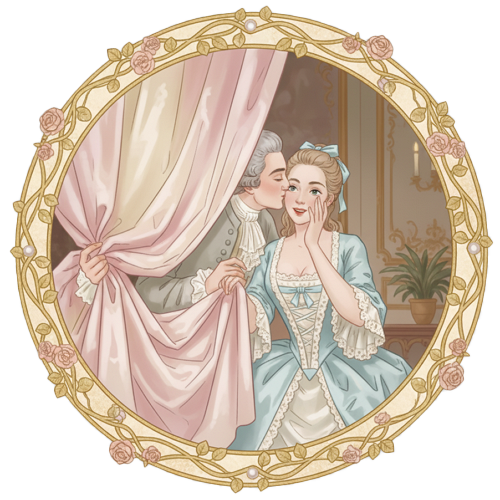
The kiss was softer than she could have imagined. It wasn’t a kiss of triumph or passion, but of discovery.
It was hesitant and deeply vulnerable, a physical confession of everything his words had just laid bare. It tasted of stale coffee and sleepless nights and a profound, shared understanding.
Anya’s eyes fluttered shut, and she met his uncertainty with a quiet confidence, her hand coming up to rest on his jaw.
The signal was sent and received. The kiss deepened, the last of his walls crumbling away under her touch.
It was a connection that transcended code, a feeling unencrypted and transmitted directly, with no firewall to block it. Their professional partnership, forged in logic and a shared crisis, was irrevocably sealed into something deeply, terrifyingly personal.
When they finally broke apart, they remained where they were, foreheads resting against each other. The only light came from the screen displaying the lines of code they had mended together.
For a long moment, neither of them spoke. There were no words for what had just happened, no syntax that could define the shift in their universe.
They simply breathed in the shared silence, a new architecture of feeling constructing itself around them.