Ten seconds.
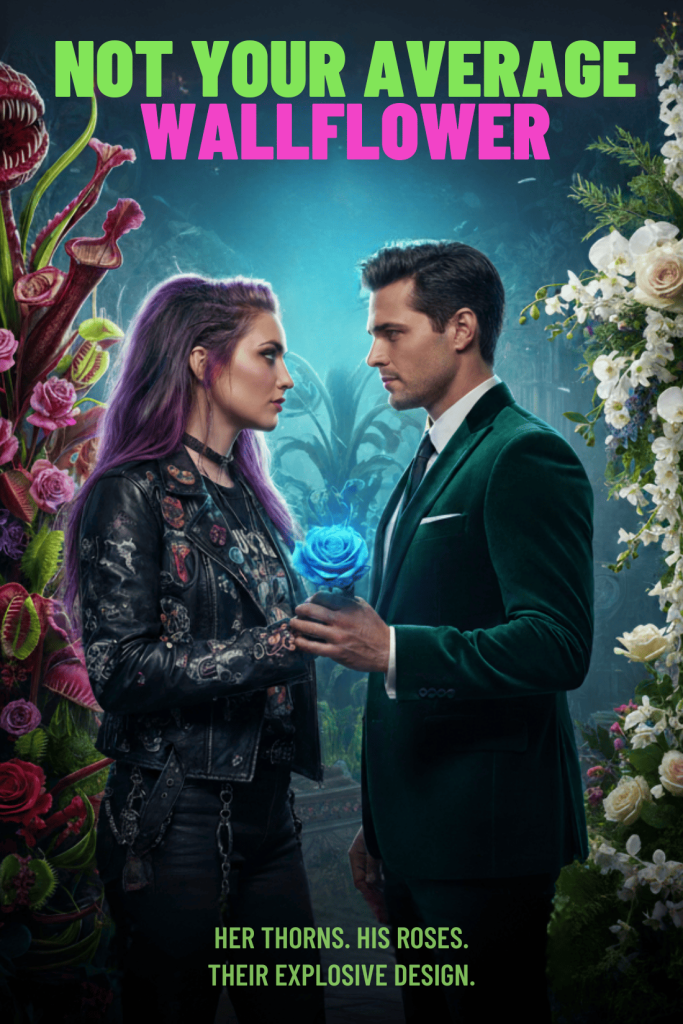
The studio lights were hot enough to wilt a cactus, and the air, thick with the saccharine scent of a thousand butchered roses, felt heavy in my lungs. My own station smelled of damp earth, peat moss, and something vaguely predatory.
“Five seconds, flor-tists!” the host’s voice boomed, a velvet tsunami of theatricality. Magnifico. Of course, that was his name. He was draped in a fuchsia silk suit that screamed, I’m not just a judge, I’m an event.
My fingers, stained with dirt and smeared with a streak of black floral dye, trembled as I made the final adjustment.
I nudged the blood-red tongue of a pitcher plant a millimeter to the left, so it looked poised to devour the cluster of delicate white stephanotis beside it.
A story of dangerous beauty. A fairytale with teeth.
“Three… two… one… Stems down!”
A collective sigh of relief and exhaustion swept through the massive, sterile-white studio. I dropped my floral shears with a clatter, my heart thumping a frantic rhythm against my ribs.
My creation, a wild, asymmetrical cascade designed for a so-called “Royal Wedding,” stood before me.
It was all deep purple hellebores, black calla lilies, and menacingly beautiful carnivorous plants, threaded through with thorny, grasping vines. It was a bouquet for a queen who eats kings for breakfast.
It was everything I was.
And it was the complete opposite of the arrangement at the station to my right.
Julian Covington III hadn’t even broken a sweat.
While I looked like I’d been wrestling a bog monster, he stood beside his pedestal, hands clasped behind his back, a vision of effortless perfection in a crisp linen shirt.
His creation was a breathtaking, technically flawless waterfall of white peonies, blush-pink roses, and lily of the valley. It was elegant, traditional, and so achingly beautiful it was almost boring.
He caught my eye, his gaze sweeping over my dark masterpiece with an expression of polite pity. “An interesting choice,” he said, his voice as smooth and cool as polished marble.
“For a gothic romance, perhaps. Not a royal wedding.”
“Not everyone’s fairytale is white roses and a life of polite obligation, Covington,” I shot back, wiping my hands on my black jeans.
“A wedding bouquet is meant to symbolize purity, hope, the dawn of a new life,” he countered, taking a step closer. The cameras, like carrion birds, swiveled to capture our exchange.
“It requires discipline. Restraint. Your… composition seems to be actively at war with itself.”
“It’s called passion,” I said, my voice tight. “You should try it sometime. It’s that messy thing that happens when you feel something other than superiority.”
A flicker of something—annoyance? surprise?—crossed his perfect features before being smoothed away. “Passion without technique is just chaos. Shock value.”
He gestured dismissively at my Venus flytrap, its tiny jaws agape. “This isn’t art. It’s a tantrum.”
Before I could tell him exactly where he could shove his perfectly conditioned peonies, Magnifico swept between us, his fuchsia suit a blinding beacon.
“Ooh, the thorns are out already, darlings! I love it!” He clapped his hands, and the panel of three stern-faced judges took their places.
The judging was a blur of floral jargon and faint praise. My design was called “daringly macabre” by one judge and “confused” by another.
They admired the concept but questioned its commercial appeal. Then, they moved to Julian. They gushed.
“Exquisite.” “Masterful.” “The epitome of romance.”
I felt a familiar, bitter burn in my throat.
This was why I was here. To prove that beauty didn’t have to be safe.
To win that hundred-thousand-dollar prize and save my grandfather’s weird little plant shop in Detroit from being bulldozed for a parking garage.
I couldn’t fail.
I wouldn’t.