The reception was a paradox of exquisite beauty and simmering chaos, a state Willa Grant had come to recognize as her natural habitat. Gilded cherubs stared down from the ceiling of the Newport mansion’s grand ballroom, their painted eyes indifferent to the earthly drama below.
The air, thick with the scent of a thousand white roses and the murmur of champagne-fueled gossip, vibrated with a fragile tension. Across the polished dance floor, Willa caught Caleb’s eye.
He gave her a small, weary smile that she felt all the way to her toes—a private acknowledgment of the minefield they were navigating together.
Just last night, on the cliffs overlooking the sea, that smile had been followed by a kiss that had felt less like a beginning and more like a homecoming. It had silenced the cynical voice in his head and, for a moment, the anxious one in hers.
They were a team. Against the bride, against the collapsed floral arch, against the very laws of physics that seemed determined to ruin this wedding.
And for the first time in a long time, Willa felt she wasn’t just a Happily Ever After Helper; she was on the verge of her own.
A screech, sharp and piercing enough to make a cherub weep, shattered the illusion.
“Vivaldi? I specifically said no Vivaldi! It’s funereal! Do I look like I’m at a funeral?”
Victoria, the Bridezilla of the Season, stood beside the string quartet, her face a mask of incandescent rage. Her couture gown, rumored to cost more than a modest home, seemed to constrict around her as she swelled with fury.
“This is a disaster,” Willa murmured, already moving. “An unmitigated, string-instrument-based disaster.”
Caleb was by her side in an instant, his camera down. “Need backup?”
“Always,” she said, the word carrying a weight that had nothing to do with the bride. It was a promise, a comfort. A lie.
She reached Victoria just as the bride was winding up to throw a crystal flute at the first violinist.
“Victoria,” Willa said, her voice a low, calm counterpoint to the bride’s hysteria. “Let’s step into the powder room for a moment. We can fix this.”
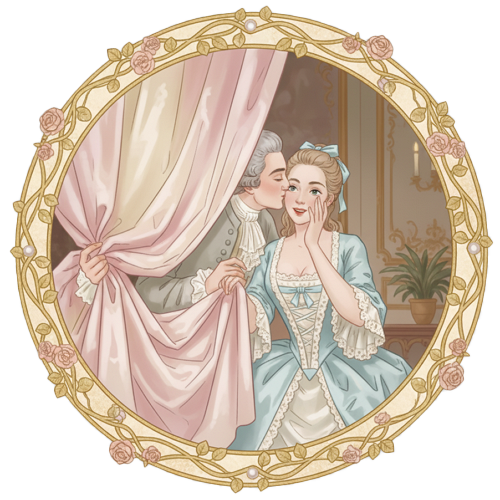
She steered the trembling, fuming bride toward a small, silk-paneled antechamber, acutely aware of the hundred pairs of eyes following them. One of those pairs belonged to the editor from Bridal Bliss, a woman whose approval could make or break Willa’s career.
Willa shot a quick, reassuring glance over her shoulder, a professional mask hiding the frantic paddling beneath the surface. Caleb followed, a silent, steady presence at her back. He was her anchor in this storm.
Inside the opulent powder room, Victoria’s rage collapsed into ragged sobs.
“Everything is ruined!” she wailed, sinking onto a velvet settee. “The flowers, the food poisoning, and now this… this death march music. They’re all laughing at me.”
“No one is laughing,” Willa soothed, kneeling beside her. This was the core of it, the raw fear beneath every bridezilla’s tantrum.
The terror of being judged. “You look breathtaking. The wedding is beautiful. This is just a tiny bump, a story you’ll laugh about later. We’ll ask them to play something else. Anything you want.”
It was in this moment of fragile intimacy, of Willa performing the quiet, emotional labor that was the true heart of her job, that the door opened.
Mads stood there, her face pale and set. She wasn’t holding her tablet with the timeline or a glass of water. She was holding Caleb’s laptop.
“Mads, not now,” Willa said, her voice tight with annoyance. “I’m handling a situation.”
“I know,” Mads said, her eyes not on the crying bride, but locked on Willa. There was a terrible sorrow in her gaze. “That’s the problem. You need to see this.”
Caleb, who had been lingering by the door to give them privacy, stiffened. “Mads, what are you doing with my laptop?”
Mads ignored him. She walked forward, her steps deliberate, and set the laptop on the marble vanity. “I tried to warn you, Willa.”
Her voice was quiet, but it sliced through the room. Willa felt a prickle of unease. “Warn me about what?”
Mads pressed the spacebar. The screen flickered to life.
The first image was hauntingly familiar. It was Willa, sitting on the balcony in Wyoming, the Tetons silhouetted behind her.
She looked exhausted, her professional armor stripped away. She was talking to Caleb, the camera’s perspective intimate, as if he were sitting right beside her.
Her own voice, raw and vulnerable, filled the small room.
“…and some days I just wonder if I’m selling a fantasy I can’t even afford to believe in myself,” her on-screen self confessed, her voice thick with unshed tears. “If this next wedding, the Newport one, doesn’t land me that feature… I don’t know if the business will survive the year.”
Willa’s breath hitched. She remembered that night. The whiskey, the shared confessions, the feeling of being truly seen by him. He had seen her, all right. Through a lens.
Before she could process the violation, the scene cut abruptly. The screen was now filled with a close-up of Victoria, filmed just hours ago, screaming at a caterer about the placement of the canapés.
It was a brutal, ugly shot, stripped of context and mercy.
And then, Caleb’s voice—smooth, analytical, and utterly cold—began its narration.
“The modern wedding is a multi-billion-dollar performance,” his voice-over stated, detached as a documentarian observing a foreign species.
“It’s a construct built on deep-seated anxieties and aspirational consumerism. From the planner peddling fantasies she can’t sustain, to the bride buying into a narrative of perfect, unblemished joy, the entire event becomes a pressure cooker of expectation. Here, we see the inevitable fracture points, the moments when the carefully curated dream collapses under the weight of the toxic fantasy of the wedding industry.”
The sound in the powder room seemed to vanish. The world narrowed to the glowing screen, to the grotesque juxtaposition of her most private fear and her client’s public meltdown, all packaged and dissected by the man she had kissed on the cliffs.
The betrayal was a physical blow. It struck her first in the stomach, a nauseating lurch, then spread like ice through her veins.
Every shared glance, every inside joke, every moment of perceived connection replayed in her mind, now tainted and grotesque. His concern after the snake incident.
His help during the family brawl. His hand on her back as they danced.
It wasn’t a connection; it was content. She wasn’t a person to him; she was a character arc. The hero of his scathing takedown.
“Willa,” Caleb whispered, his face ashen. He took a step toward her, his hands outstretched. “That’s… that’s a rough cut. It’s not— I can explain.”
Willa flinched back as if he were on fire. She looked at him, truly looked at him, and saw not the man who’d seen her vulnerability, but the predator who had cataloged it.
Victoria, her own tears forgotten, was on her feet, pointing a trembling, diamond-clad finger at the screen.
“Is that me? Is that what this is? Some kind of sick movie?” Her head whipped from Caleb to Willa. “You! You were in on this! You let him film me at my worst!”
“No,” Willa choked out, the word tasting like ash. “No, I didn’t know.”
But the accusation hung in the air, thick and suffocating. The public humiliation crashed over her, followed by the tidal wave of private heartbreak.
Her business, her reputation, her heart—all shattered in the space of a thirty-second video clip. The Bridal Bliss editor was out there.
She’d hear about this. The feature was gone. Everything was gone.
“Get out,” Victoria hissed, her voice low and venomous. “You are fired. Both of you. Get out of my wedding. Now.”
Mads moved to Willa’s side, her hand a steadying presence on her arm, but Willa barely felt it. Her entire focus was on Caleb, whose face was a canvas of panic and regret.
“Willa, please,” he begged, his voice cracking. “Don’t look at me like that. I was going to tell you. I never meant for you to see it like this.”
The excuse was so pathetic, so profoundly inadequate, that a single, mirthless laugh escaped her lips. She didn’t yell. She didn’t scream.
The pain was too deep for that. It had hollowed her out, leaving nothing but a vast, echoing silence.
She shook her head, a small, final gesture of dismissal. She couldn’t find the words, and even if she could, he didn’t deserve to hear them.
Without another look at him, she turned and walked out of the powder room. She pushed through the gilded door and back into the reception, a ghost moving through her own professional graveyard.
The music, the laughter, the clinking of glasses—it all sounded like it was coming from a great distance. She felt the stares, saw the whispers bloom like poisonous flowers in her wake.
She walked past the dance floor, past the towering cake, past the life she had been dreaming of just ten minutes earlier. She didn’t look back. She couldn’t.
Behind her, she left the wreckage: a furious bride, a horrified business partner, and the man who had captured her heart, only to edit it into his perfect, final scene.