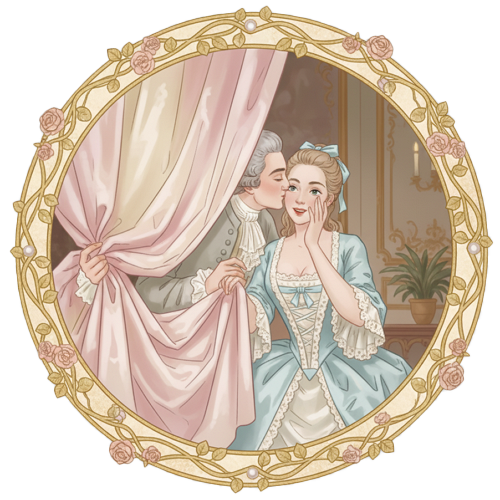
The diamond on Chloe Morgan’s finger was a weapon. A ten-carat, emerald-cut declaration of war on mediocrity, it caught the light from the ballroom’s crystal chandeliers and fractured it into a thousand tiny, blinding promises.
Promises of a corner office, of summers in the Hamptons, of a future so meticulously curated it felt less like a life and more like a corporate merger.
“To Chloe,” Bennett Sterling III announced, his voice a smooth, practiced baritone that cut effortlessly through the appreciative murmur of New York’s legal and financial elite. He held his champagne flute aloft, the other hand resting possessively on the small of her back.
“The sharpest mind at Sterling, Hewitt & Finch. The most beautiful woman in this room. And, as of tonight, the future Mrs. Bennett Sterling. We’re not just building a life; we’re building a dynasty.”
A polite ripple of applause. Chloe summoned a smile that felt like it was cracking the enamel on her teeth.
She was a show pony in a four-thousand-dollar dress, her mane professionally styled, her hooves polished. Bennett squeezed her waist, a proprietary gesture that was meant to be affectionate but felt like a brand.
“Smile, darling,” he murmured, his breath smelling of vintage champagne and ambition. “Our photographer is over by the raw bar.”
She smiled wider, tipping her glass toward him in a perfect imitation of a happy fiancée. On the surface, this was it: the pinnacle.
A rising star in corporate law, engaged to the firm’s heir apparent, celebrating in a ballroom overlooking Central Park. She had fought, clawed, and sacrificed for this.
She’d billed more hours, won more unwinnable cases, and slept less than anyone she knew to earn her place in this gilded cage. So why did it feel like the bars were closing in?
Her phone, tucked away in a tiny, useless beaded clutch, began to vibrate against her hip. A frantic, insistent buzz.
Probably a junior associate with a last-minute question about the McDowell acquisition. It could wait. Nothing could pierce this bubble.
Bennett was now deep in conversation with a federal judge, his hand still clamped to her back, pulling her into the orbit of their conversation about tort reform. Chloe’s gaze drifted over the perfectly coiffed heads, the glittering jewelry, the air thick with the scent of lilies and money.
She felt a profound, aching disconnect, as if she were watching a movie of her own life. The protagonist was brilliant, successful, and deeply, terrifyingly numb.
The buzzing in her purse wouldn’t stop. It was a frantic, desperate rhythm, a Morse code signal from a world away.
Annoyance pricked at her. With a murmured, “Excuse me for a moment,” she slipped away from Bennett’s side, ignoring his flicker of irritation.
She found a small alcove near the coat check, the party’s roar softening to a dull thrum. She pulled out her phone.
The screen read: AUNT CAROL.
Her heart gave a painful lurch. Aunt Carol never called after 9 p.m.
Not unless…
“Carol?” Chloe answered, her voice tight.
“Chloe, thank God.” Her aunt’s voice was a ragged tear in the smooth fabric of the evening. She was crying.
“Oh, honey, I’m so sorry to call you tonight, of all nights, but I didn’t know who else…”
“What is it? What’s wrong?” Chloe’s carefully constructed composure began to crumble.
“It’s the store, sweetie. The Next Chapter.” A sob broke through the line.
“The bank called. The final notice came today. The roof… that last storm, it just… it caved in over the poetry section. The water damage is everywhere. We’re ruined, Chloe. They’re going to foreclose.”
The words hit her like a physical blow. The Next Chapter. Her grandmother’s bookstore.
The dusty, magical, ink-and-paper sanctuary that had raised her. The scent of old books and lemon polish flooded her memory, so potent it momentarily erased the cloying smell of lilies.
She saw her grandmother’s warm smile, felt the rough texture of the armchair where she’d first read To Kill a Mockingbird. It wasn’t a building; it was the repository of her soul, the one place she’d ever felt completely, utterly herself.
“How bad is it?” she asked, her voice dropping to a whisper.
“They’re giving us thirty days,” Carol wept. “Thirty days to pay off the loan and fix the damages, or they seize it. It’s impossible. We’re already so far behind.”
Chloe’s legal mind snapped into action, shoving the panic down. “Okay. Okay, don’t panic. What’s the number? How much to stop the foreclosure?”
The figure her aunt quoted was staggering, but not impossible. It was a mid-range luxury sedan.
It was two of the watches Bennett owned. It was a fraction of his yearly bonus.
“I’ll handle it,” Chloe said, a strange calm settling over her. “I’ll wire the money tomorrow.”
“Oh, Chloe, no, I couldn’t ask—”
“You’re not asking. I’m telling you. It’s going to be okay.”
She ended the call, her hand trembling. The noise of the party suddenly felt garish and offensive.
She turned to go back, to find Bennett, to tell him what happened. She found him waiting just a few feet away, his expression a mask of cool disapproval.
“Trouble in paradise?” he asked, his tone laced with a condescension that set her teeth on edge.
“It’s my aunt,” Chloe said, her voice shaking slightly. “My grandmother’s bookstore back home… it’s about to be foreclosed on. The roof collapsed.”
Bennett’s face registered a flicker of something—not sympathy, but logistical annoyance. As if she’d just informed him of a traffic jam that would make them late for dinner.
“Right. The little bookshop,” he said, the word ‘little’ dripping with dismissiveness. “Well, that’s a shame. Send them a check. We’ll write it off as a charitable donation.”
He took her arm, ready to steer her back to the party. “Now, come on. Judge Albright was just about to tell me about his golf trip with Senator Hayes.”
Chloe stood frozen, the phone still clutched in her hand. “A check isn’t going to fix a collapsed roof, Bennett. Or the water damage. It needs… it needs work. It needs someone there.”
He sighed, a long, put-upon sound. “Chloe, we can hire people for that. We’ll send a ‘specialist.’ A ‘restoration team.’ Whatever they call them in… where is it again? Northwood?”
He said the name of her hometown like it was a quaint, slightly dirty word. “It’s a building. A sentimental asset, perhaps, but it’s a depreciating one. Let’s not get overly emotional about a business that has clearly been failing for years.”
He smiled, a perfect, white, predatory smile. “Let me handle it. I’ll have my assistant find the best people. It’ll be a rounding error in our finances. Now, that dress deserves to be seen.”
Chloe looked at him. Really looked at him. At the perfect tailoring of his tuxedo, the glint of his platinum cufflinks, the detached pragmatism in his cool blue eyes.
He was offering a solution—an efficient, sterile, corporate solution to a problem that was bleeding all over her heart. He saw a failing business. A line item. A nuisance to be managed.
He didn’t see the worn floorboards where she’d learned to walk. He didn’t see the faded ink marks on a doorframe that tracked her height.
He didn’t see the ghost of her grandmother, her hands dusted with the flour of old paper, offering her a story that could save her life.
He didn’t see her.
And in that sterile, air-conditioned moment, something inside her snapped clean in two. The carefully constructed façade of Chloe Morgan, Esq., future Mrs. Sterling, shattered.
And underneath was the girl who loved the smell of rain on old books more than the scent of victory in a courtroom.
The realization was a silent, violent detonation in her chest. This life, this man, this entire glittering future—it was a lie.
A beautiful, expensive, soul-crushing lie.
Saving the store wasn’t about the money. It wasn’t about the building. It was about saving the last, authentic piece of herself before it was swallowed whole by the Sterling dynasty.
“No,” she said. The word was quiet, but it landed in the space between them with the force of a gavel.
Bennett blinked. “No? No, what? No, you don’t want me to handle it?”
“No,” she repeated, her voice gaining strength, drawing it from some deep, forgotten well inside her. She slipped the ten-carat diamond off her finger. It felt impossibly light. The skin underneath was pale and indented.
“You’re right. It is a sentimental asset. My sentimental asset.”
She held the ring out to him. His perfect smile vanished, replaced by a mask of disbelief and fury.
“What the hell are you doing, Chloe?” he hissed, his eyes darting around to see if anyone was watching.
“I’m going home,” she said, her gaze clear and unwavering. The numbness was gone, replaced by a terrifying, exhilarating clarity.
“I’m not sending a check, and I’m not sending a ‘specialist.’ I’m going myself.”
“Don’t be ridiculous. We have the McDowell closing on Friday. The benefit for the Philharmonic is next week. Our engagement party is happening right now.” Each point was a bullet meant to shoot down her absurd rebellion.
But she was already bulletproof.
“Reschedule the closing. Send my regrets to the Philharmonic,” she said, placing the ring firmly in his palm and closing his fingers around it. The warmth of his skin felt alien.
“And I do believe this party is for you.”
She turned and started walking, not back toward the ballroom, but toward the exit. Her beaded clutch felt ridiculous, her heels a liability.
All she could think about was the smell of damp earth and rotting wood, of mildewed paper and hope. It was the smell of a disaster. It was the smell of home.
Bennett’s voice followed her, a low, menacing snarl. “If you walk out that door, Chloe, don’t bother coming back.”
She didn’t turn around. She didn’t even slow down.
The doorman, bless his oblivious heart, swung the heavy glass door open for her, and a blast of cool, damp city air hit her face. It felt like the first real breath she’d taken in a decade.
A plan was already forming in her mind, sharp and clear and insane. A two-month leave of absence. Her savings account. A U-Haul.
She would face the wreckage of the past, both the building’s and her own. She would wrestle this legacy back from the brink with her own two hands.
She was going home. And she wasn’t just going to fix a leaky roof. She was going to war.