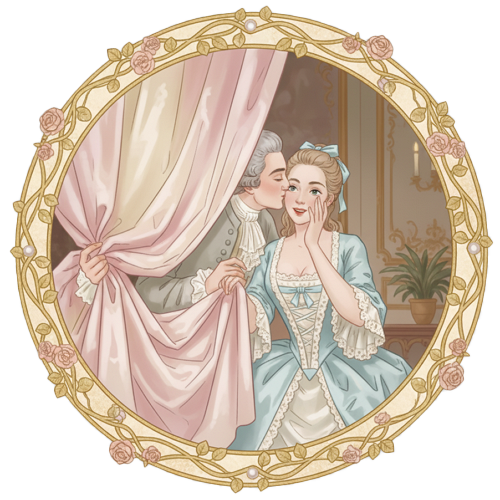
The cavernous belly of the Theatre Royal might as well have been a tomb. For Finnian Shaw, it held the ghost of a symphony, the phantom limb of a melody he could no longer feel.
Rehearsals for The Echo of a Soul had become a daily exercise in exquisite torture.
The music, once a living, breathing entity forged in secret rooms and fueled by stolen glances, was now a hollow corpse.
The hired pianist, a technically proficient man with spectacles perched on his nose, played the notes with sterile precision.
He struck the keys, but he did not coax them. He followed the tempo, but he did not feel the pulse.
“No, no, no!” Finnian’s voice, raw with frustration, cracked through the theatre. He ran a hand through his already dishevelled hair, his gaze fixed on the lead soprano, Eleanor Vance.
“It’s not a dirge, Eleanor! There’s meant to be longing in that passage, a desperate hope against the dying of the light. Can you not feel it?”
Eleanor, a seasoned performer with a formidable voice, pressed her lips into a thin line.
“I am singing the notes on the page, Mr. Shaw. As is Mr. Abernathy. Perhaps the fault lies with the notes themselves.”
The barb struck Finnian like a physical blow. He knew she didn’t mean it as a true slight against the composition—everyone in the company knew the music was revolutionary—but it was a truth all the same.
The fault did lie with the notes, for they were incomplete without their soul. Without Beatrice.
His mind replayed the words of her letter, the script as cold and elegant as the hand that must have penned it. Our arrangement has become untenable… I find I must withdraw… I wish you success.
Not a single word of regret, of explanation, of the passion that had blazed between them. It was a letter from a stranger, a dismissal from a mistress to a servant.
He had burned it, but the ashes still coated his tongue.
Mr. Harris, the theatre manager, approached him from the wings, his face a mask of weary concern. “Finnian, the company is on edge. We open in a fortnight. We cannot afford this… this friction.”
“Then find me a musician who can play with something other than their fingers!” Finnian snapped, gesturing wildly towards the orchestra pit. He immediately regretted his tone. These people were merely doing their jobs.
The one who had abandoned her post was the one who haunted his every waking moment.
He pictured her now, back in her gilded cage in Mayfair. Accepting Lord Ashworth’s simpering courtesies.
Planning a wedding. Forgetting the dusty rehearsal rooms and the ink-stained sheet music they had shared like a sacrament.
The thought was a venom that soured his blood. He had been a dalliance, a thrilling diversion from her insipid life, and now the game was over.
“Let us take a respite,” Harris said diplomatically, clapping his hands. “One hour.”
The musicians sighed in collective relief, the tension draining from the stage. Finnian stalked away, needing air, needing to escape the sound of their masterpiece being so thoroughly butchered.
He didn’t go to a tavern. He couldn’t bear the noise.
Instead, his feet carried him through the mews and back alleys of Covent Garden until he stood before the grimy door of the music shop, staring up at the window of the room where it had all begun.
He didn’t go in. He couldn’t.
But standing there, he remembered the ferocious intelligence in her eyes as she’d argued a melodic transition, the way her brow would furrow in concentration before her fingers would fly across the keys, birthing a melody more perfect than he could have ever conceived.
She wasn’t just a collaborator. She was the other half of the opera’s soul.
A wave of fury, clean and sharp, cut through the fog of his heartbreak. Ashworth. Danbury. They had done this.
They had smothered her, convinced her that their world of porcelain dolls and empty titles was all she was fit for. And she, in her fear, had believed them.
But their work… their work was more than a secret love affair. It was a statement. A rebellion.
It was the story of a woman finding her voice in a world determined to keep her silent. He had written the words, but she had given them their breath, their power.
To let it fail now, to let it premiere as this soulless, technically perfect failure, was to let them win. It was to let them silence her forever. It would be the ultimate betrayal not of their love, but of her spirit.
“No,” he whispered to the grimy London air. “I will not let you become a ghost in your own life.”
The decision was a lightning strike. He turned on his heel and strode back to his lodgings, a new, defiant fire in his veins.
He would not write her a love letter. He would not beg her to return to him. Love was a vulnerability they could no longer afford.
He would write her a challenge. He would write her a mirror and force her to look at her own reflection.
His small room was a disaster of discarded drafts and empty teacups. He cleared a space on his cluttered desk, ignoring the gnawing emptiness in his stomach.
He took out a fresh sheet of manuscript paper, the stark white lines a battlefield awaiting his charge.
He would compose one final aria. Not for the star-crossed lovers of their story, but for the heroine alone on the stage, at her lowest point, having given up everything she holds dear.
It would not be a song of lost love. It would be an aria of defiance.
The words came first, torn from the very fabric of his righteous anger and his desperate hope for her.
A gilded cage, these silent halls,
A whispered name, when duty calls.
I traded truth for hollow vows,
Beneath the weight of gilded boughs.
But music taught my soul to soar,
Beyond this lock, beyond this door.
This echo is not my lament,
But a promise heaven-sent.
I will not be the ghost you see,
I’ll break the calm, I will be free.
This quiet is a lie I’ve told,
A story growing tired and old.
Let thunder break the sound of sleep,
From secrets that my heart can’t keep.
My voice, my truth, my one true art,
Will be the beating of my heart!
Then came the music. He wrote with a feverish intensity, the notes pouring from him not as a gentle stream but as a crashing wave.
It began with a quiet, melancholic piano solo, the melody full of the suffocating elegance of a Mayfair drawing-room. It was the sound of Beatrice’s despair.
But then, it began to build. A single, dissonant chord shattered the harmony, a moment of rebellion.
The tempo quickened, the chords grew bolder, more powerful, climbing higher and higher until they erupted into a majestic, soaring crescendo. It was a battle cry set to music.
It was Beatrice’s soul, as he knew it to be: brilliant, passionate, and utterly untameable.
He worked through the night, the candle burning down to a stub. When he was finished, his entire body ached with exhaustion, but his spirit was ablaze.
This was his final message to her. Not come back to me, but come back to yourself.
The next morning, he paid a young street urchin a handsome sum to deliver the rolled-up sheet music.
“To Marlowe House,” he instructed, his voice hoarse. “For Lady Beatrice. Into her hands only.”
***
The silence in Marlowe House was a physical presence, a thick, suffocating blanket. Beatrice moved through her days in a state of muted grace, a perfect porcelain doll for her brother to display.
She endured fittings for a wedding gown of oppressive ivory silk. She accepted the vacant compliments of her brother’s associates.
She sat beside Lord Ashworth at dinner parties, a faint, polite smile fixed on her lips while his proprietary hand rested on her chair. Each touch was a brand, a reminder of the bargain she had made.
She told herself it was for Finnian. To protect him. To save him from ruin and imprisonment.
This was her sacrifice, her noble, silent act of love. But in the dead of night, the silence screamed at her, and her sacrifice felt less like nobility and more like a self-imposed damnation.
Her pianoforte remained closed, its keys gathering a fine layer of dust, a monument to a part of her that had died.
She was taking tea with her aunt when the butler entered, bearing a silver salver. On it lay a simple roll of paper, tied with a bit of twine. It was addressed to her.
“What is it, dear?” her aunt asked, peering through her lorgnette.
“I cannot imagine,” Beatrice said, her voice a perfect, level calm, even as her heart began to hammer against her ribs like a trapped bird.
She recognized the messenger’s scrawl, the hasty markings of the Covent Garden copyist.
She tucked it away, waiting until she was finally alone in the sanctuary of her bedroom. Her hands trembled as she broke the twine and unrolled the manuscript.
The Unsung Aria
She read the lyrics first, and the air left her lungs in a single, painful gasp. The polite mask she wore for the world fractured.
This was not a plea for a lost lover. This was not Finnian begging for her return.
This was a raw, unflinching portrait of her own soul. A gilded cage… I traded truth for hollow vows…
He saw. He understood everything. The choice she had made, the prison she had built for herself. He wasn’t mourning their end; he was mourning her.
With a sob catching in her throat, she moved to the pianoforte. She lifted the heavy lid, the scent of rosewood and old polish filling the air.
Her fingers, strangers to the keys now, hovered over the ivory. She placed the sheets before her and began to play.
The opening notes were quiet, achingly familiar—the sound of her own genteel misery. It was the music of her life as it was now.
But then came the shift. The jarring, defiant chord that broke the spell.
Her fingers flew faster, the music swelling, growing wilder, more powerful. It was a storm, a tempest, the very music she used to compose in secret when the walls of her life closed in.
It was his voice and hers, entwined in one last, desperate masterpiece. It was a dare. A challenge. A question.
Is this who you are? A silent ghost in a beautiful house?
When the final, triumphant chord faded, the room was utterly still. But the silence was different now.
It was not empty. It was charged, electric, filled with the echo of that defiant, magnificent sound.
Tears streamed down Beatrice’s face, but they were not tears of sorrow. They were tears of rage, of awakening, of a terrible and glorious resolve beginning to take root in the barren soil of her heart.
He had sent her a mirror. And for the first time in weeks, she was truly seeing herself.
The question was, what would she do about it?