The fire died as the night did, slowly and grudgingly. What had been a roaring beast hours before was now a smoldering skeleton, its black ribs stark against the bruised purple of the pre-dawn sky.
The air, thick with the ghosts of burnt pine and hay, clung to Alistair’s clothes and rasped in his throat. Every muscle in his body ached with an unfamiliar, righteous exhaustion.
His city-soft hands were blistered from the bucket brigade, his fine wool trousers were singed at the cuff, and a deep smear of soot slashed across his cheekbone. He looked less like a journalist and more like a survivor.
He sat on the split-rail fence bordering the Millers’ property, a safe distance from the hissing embers of their barn. The chaos had subsided, replaced by a communal weariness.
Families were huddled together, voices low and murmuring. Children who had been woken by the flames were now asleep in their mothers’ arms.
Alistair watched them, not with the detached eye of an observer cataloging local color, but with a strange, protective ache in his chest. These were no longer subjects for a story.
They were people whose fear he had shared, whose sweat had mingled with his own.
A tin cup of water was pressed into his hand. He looked up to see Sera standing before him, her face smudged with ash, her braid coming loose in soft tendrils around her temples.
The firelight had been replaced by the gentle wash of early morning, and in it, he could see the profound exhaustion etched around her eyes. Yet, they were clear, and they held his gaze without artifice.
“Thank you,” he murmured, his voice hoarse. He took a long drink, the cool water a balm on his raw throat.
She didn’t move away. Instead, she leaned against the fence beside him, her shoulder just shy of touching his. They watched the smoldering ruins together, the silence between them comfortable, weighted with all that had just happened.
“You didn’t have to do that,” she said, her voice quiet but firm. “You could have just watched. Taken your notes.”
There was no accusation in her tone, only a statement of fact. It was, after all, exactly what he had come here to do.
The thought felt like a betrayal now, a relic from a different man’s life.
“There wasn’t time for notes,” he said, looking at his blistered palms. “Besides, I’ve discovered I’m a terrible observer when things are burning.”
A small, weary smile touched her lips. “Granny Mae says a person’s true nature shows itself in smoke and in sorrow.”
Alistair let out a short, humorless laugh. “Then I fear my true nature is that of a fool who ruins a perfectly good suit.”
He gestured to his singed trousers, a weak attempt to deflect the conversation back to the surface.
But Sera didn’t take the bait. “No,” she said, her gaze steady on the horizon.
“I think she meant it shows what you’re willing to fight for.”
Her words landed with unexpected force, chipping away at the last of his carefully constructed cynicism.
What had he fought for tonight? A barn. Livestock. A family’s livelihood.
He hadn’t thought; he had simply acted, moved by a primal instinct to help, to protect. It was a feeling he hadn’t allowed himself to experience in years.
“I don’t fight for things, Miss Mayhew,” he said, the old habit of formal distance a comforting, if ill-fitting, cloak.
“I write about them.”
“Is that what you were doing when you pulled Daniel Miller’s terrified little girl away from the heat?” she asked, her voice gentle.
“Writing a sentence in your head?”
He fell silent, the memory sharp and visceral—the child’s small, hot hand clutching his, her face streaked with tears and soot. He had lifted her, carried her to her mother, and hadn’t given it a second thought.
He looked at Sera, the layers of his identity—skeptic, journalist, cynic—peeling away under her direct, compassionate gaze. All that was left was the raw, exhausted man sitting on a fence at dawn.
“Why?” he asked, the question escaping him before he could stop it. It wasn’t about the fire.
It was about her, about all of this.
“How do you do it? How do you face men like Blackwood, fires like this, fevers that won’t break… and still speak of God’s will and prayer?”
The question came out sharper than he intended, edged with a pain that was more than a decade old. “Where is the sense in it?”
Sera turned to face him fully, her expression softening with an understanding that unnerved him.
“You think faith is a shield, don’t you, Mr. Finch? Something to stop the bad things from happening.”
“Isn’t it supposed to be?” he shot back, the anger finally bubbling to the surface.
“What good is a God who lets barns burn? Or who lets a child…”
He stopped, his throat closing around the words. The image flooded his mind, unbidden and unwelcome: a small, shadowed room in Philadelphia, the air thick with the cloying scent of sickness and useless tonics.
Sera waited, her silence an invitation, not a demand. And in that quiet, patient space, the dam he had built around his heart finally broke.
“My sister,” he said, the words a ragged whisper. “Her name was Lily. She was eight years old.”
He stared at the glowing embers of the barn, but he was seeing that room, seeing the fever-bright shine in his sister’s eyes.
“She had diphtheria. The doctors did what they could, but it wasn’t enough. Every night, for two weeks, I knelt by her bed. I prayed until my knees were raw and my voice was gone. I begged. I bargained. I promised God anything, everything, if He would just… let her breathe.”
He took a shaky breath, the memory as sharp as broken glass.
“On the last night, I remember the priest came. He spoke of God’s mysterious ways, of a better place. And I listened to his empty words while my sister was fighting for every rattling breath beside me. I prayed harder than I had ever prayed in my life. I had absolute faith. I believed.”
He finally turned to look at Sera, his eyes burning with unshed tears.
“And then she was gone. Just… silence. In that silence, I understood. It was all a lie. A beautiful, comforting, and utterly useless lie. Faith didn’t save her. It just made the silence at the end that much louder.”
He finished, his chest heaving, the confession leaving him hollowed out and exposed. He expected pity, or perhaps a clumsy platitude about heaven gaining an angel.
He was prepared to lash out at either.
Instead, Sera simply said, “I’m so sorry, Alistair.”
She used his first name, and the sound of it, spoken so softly, undid him. He looked down, unable to meet her eyes, ashamed of his own vulnerability.
After a long moment, she spoke again.
“I was ten when the fever took my parents. It came through the valley one winter, swift and cruel. They were gone within a week of each other. I remember Granny Mae holding me, telling me that God hadn’t taken them from me, but that He was there to hold me now that they were gone.”
She paused, her gaze distant.
“I was furious. I screamed at her. I asked her what good a God was who would make me an orphan. For a long time, I felt just like you. Alone. Betrayed by a silence where comfort was supposed to be.”
Alistair looked up, surprised. He had imagined her faith as a simple, unbroken thing, inherited and accepted without question.
“My faith isn’t a shield, Alistair,” she continued, meeting his gaze.
“It’s not something that stops the fire from starting or the sickness from coming. It’s… it’s the strength to walk through the smoke. It’s the hope that dawn will break on the other side of the fever. It didn’t save my parents, but it saved me from being consumed by the bitterness of losing them. It’s not about preventing pain. It’s about how you endure it. How you find a way to plant seeds in the ashes.”
Her words weren’t an argument or a sermon. They were a testimony, spoken from a place of shared grief.
She wasn’t trying to answer his anger; she was sitting with him in it, offering her own story not as a solution, but as a companion to his. For the first time, someone had acknowledged the legitimacy of his pain without trying to explain it away.
The wall between them, already cracked by shared danger, crumbled into dust. He wasn’t a journalist investigating a subject.
She wasn’t a healer under a cynic’s microscope. They were two people who understood the shape of loss, who knew the sound of that final, terrible silence.
He saw the delicate strength in her, the deep well of compassion that wasn’t a performance for her flock but the very core of her being.
He saw the woman who led her people, who mended their wounds, who stood defiant against bullies like Blackwood, and who still had the grace to sit with a broken stranger and share her own scars.
The rising sun cast a pale golden light over the valley, catching the ash still dancing in the air like mournful sprites. He reached out, his calloused fingers gently brushing the soot from her cheek.
His touch was hesitant, questioning. She didn’t pull away. Instead, she leaned into his hand, her eyes fluttering shut for a brief moment.
The space between them vanished. Alistair leaned in, slowly, giving her every chance to retreat.
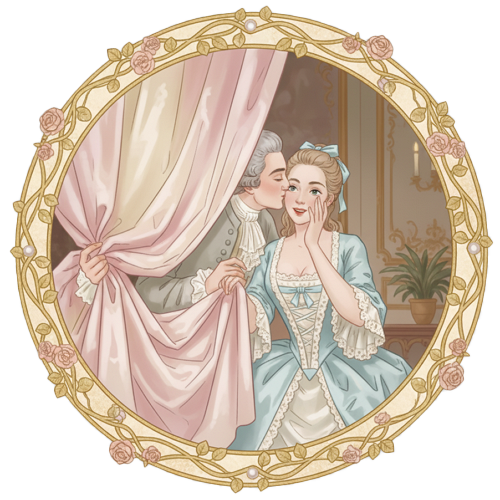
When she didn’t, he pressed his lips to hers. It was not a kiss of passion, but of profound, aching tenderness.
It was tentative, tasting of smoke and sorrow and the faintest hint of morning dew. It was a recognition, a quiet admission that in this broken, messy world, sometimes the only miracle one could hope for was finding another soul who understood.
When he pulled back, the sun had crested the ridge, bathing them in its fragile, newborn light. The world was still, and for the first time in a decade, the angry silence in Alistair Finch’s heart was quiet.